Material is the starting point. The way strands meet, turn and finish gives a woven object its structure, surface and character.
This is a general guide to materials and techniques, not a specification sheet for the CAVELOYA catalog.
A living history
From everyday necessity to expressive form.
01 / Daily life
Objects made to carry and keep
Weaving has served practical needs across different cultures. A storage basket preserved in The Metropolitan Museum of Art, dated about 1491–1473 BCE in Egypt, combines grass coils and palm-leaf stitching. It offers one tangible example of the long history of woven containers—not a claim about a single origin of weaving.
Basketry traditions develop through local materials, daily practices and exchange. In Japan, Chinese-style bamboo baskets became part of tea culture; changing tastes helped makers develop distinctive forms. This is one regional story within a much wider craft heritage.
Woven structures can be useful vessels, furnishings or expressive objects. The National Gallery of Victoria traces how Japanese bamboo traditions continue into contemporary sculptural work. That dialogue between inherited techniques and new ideas helps frame our appreciation of woven design today.
These examples describe broader craft history. They do not establish CAVELOYA’s founding date, manufacturing heritage or the provenance of an individual product.
01
Rattan & Cane
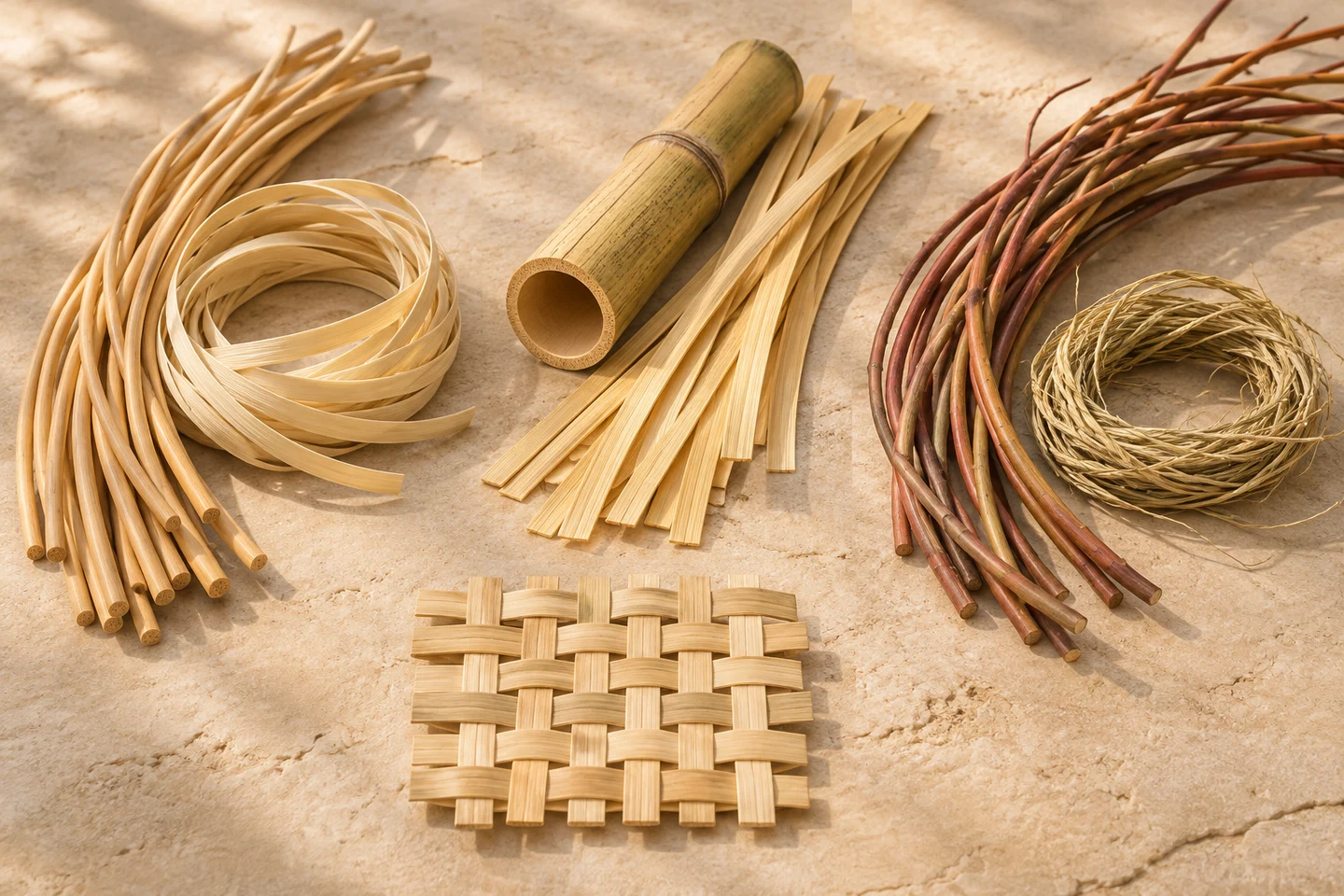
Rattan refers to climbing palms and their stems. In furniture language, cane often means strips from the outer skin used for woven panels and binding; the word can also refer to the stem itself. Ask which part and preparation are intended.
Confirm: stem, peel or core; weave and finish.02
Bamboo
Bamboo culms can be split and worked into narrower strips for weaving. Strip width and arrangement affect the pattern and visual openness; preparation depends on the intended object.
Confirm: strip preparation, edges and construction.03
Other Plant Fibres
Willow rods, grasses and other plant fibres offer different forms of weaving material. Names such as seagrass or water hyacinth should be clarified with the supplier rather than identified from appearance alone.
Confirm: exact material, composition and intended use.
A useful distinction
Wicker Is a Technique, Not a Single Material
“Wicker” describes woven work, not one botanical species. Similar-looking products may use different plant materials or synthetic strands. A wicker appearance alone does not confirm composition or outdoor suitability.
The art of handweaving
From Strands to Form
Prepare
Select and prepare strands for the intended weave.
Interlace
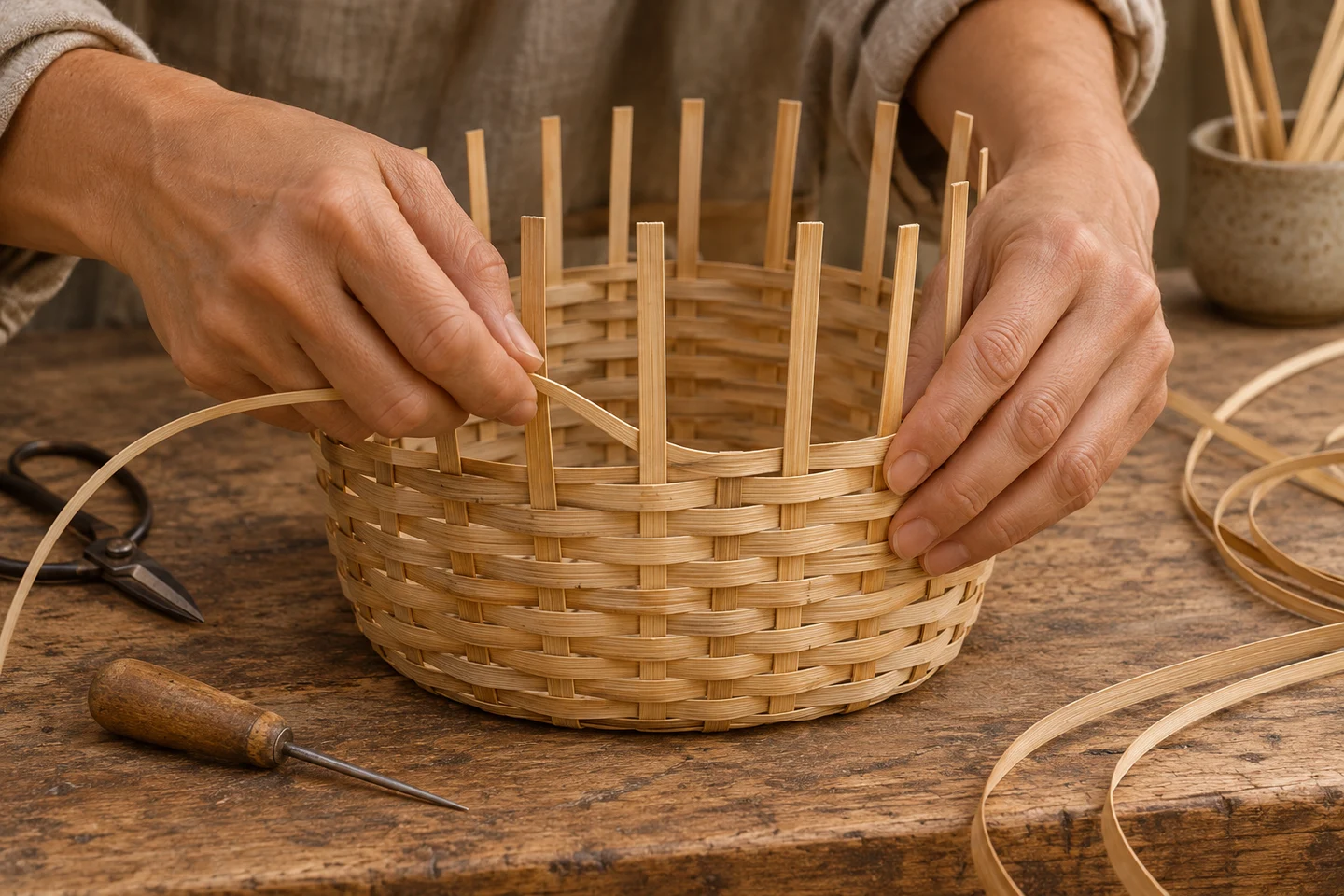
Build a surface by working strands across or around one another.
Shape
Guide the weave around a base, frame or developing form.
Pattern
Vary spacing and direction to develop rhythm and texture.
Finish
Resolve the rim and loose ends with a suitable edge treatment.
For global buyers
Choosing Woven Products
Use the visual reference to start a precise conversation. Bring these questions to your product or sourcing inquiry.
Material
What is the exact composition, including frame, weave and finish?
Application
Where will it be used, and what care or exposure conditions need review?
Construction
Which dimensions, openings, edges and attachments matter to the brief?
Requirements
What quantities, packaging, branding and destination should be discussed?
Appearance does not establish load capacity, weather resistance, electrical compliance or certification. Confirm these for the selected product where relevant.